

How Consensus builds scalable asset management
Growing without increasing risk.
Higher efficiency
“When portfolio managers get the right tools and smarter workflows, they can focus on what they do best: creating value for their clients.”
Satisfied portfolio managers
“Portfolio managers prefer working in Sharpfin – an intuitive, secure, and fast platform.”
Better risk control
“The organisation gained better visibility into processes and decisions. Reporting became more efficient, and the dialogue with supervisory authorities more structured.”
A customer case on scaling asset management with Sharpfin as a strategic system partner
For many asset management firms, there comes a point when existing ways of working start to limit the business. What once worked well in a smaller organisation gradually becomes a barrier to growth. More portfolio managers, more clients, and new strategies create demands that manual processes and person-dependent systems can no longer meet.
Consensus Asset Management chose to address this proactively—before it became a problem.
Why is growth without structure a risk in itself?
In recent years, Consensus has pursued a deliberate expansion, growing from its base in Gothenburg to offices in Örebro, Eskilstuna, Borås, Halmstad, and Malmö. In parallel, the company has refined both its brand and client offering. This growth journey places new demands on organisation, technology, and the ability to scale without losing what has made the firm successful: long-term client relationships.
It is no coincidence that relationships are at the core of Consensus’ value proposition. The business is built on advisors who listen, understand each client’s goals, and stay with them over time. For this to work in practice—not only in theory—the infrastructure must support it. Portfolio managers need to focus on clients, not on systems and administration.
When Consensus analysed its situation, several challenges became clear: person-dependent processes, manual steps in key workflows, and limited ability to onboard new portfolio managers efficiently. As regulatory demands increased, it became evident that the existing infrastructure risked slowing development rather than enabling it.
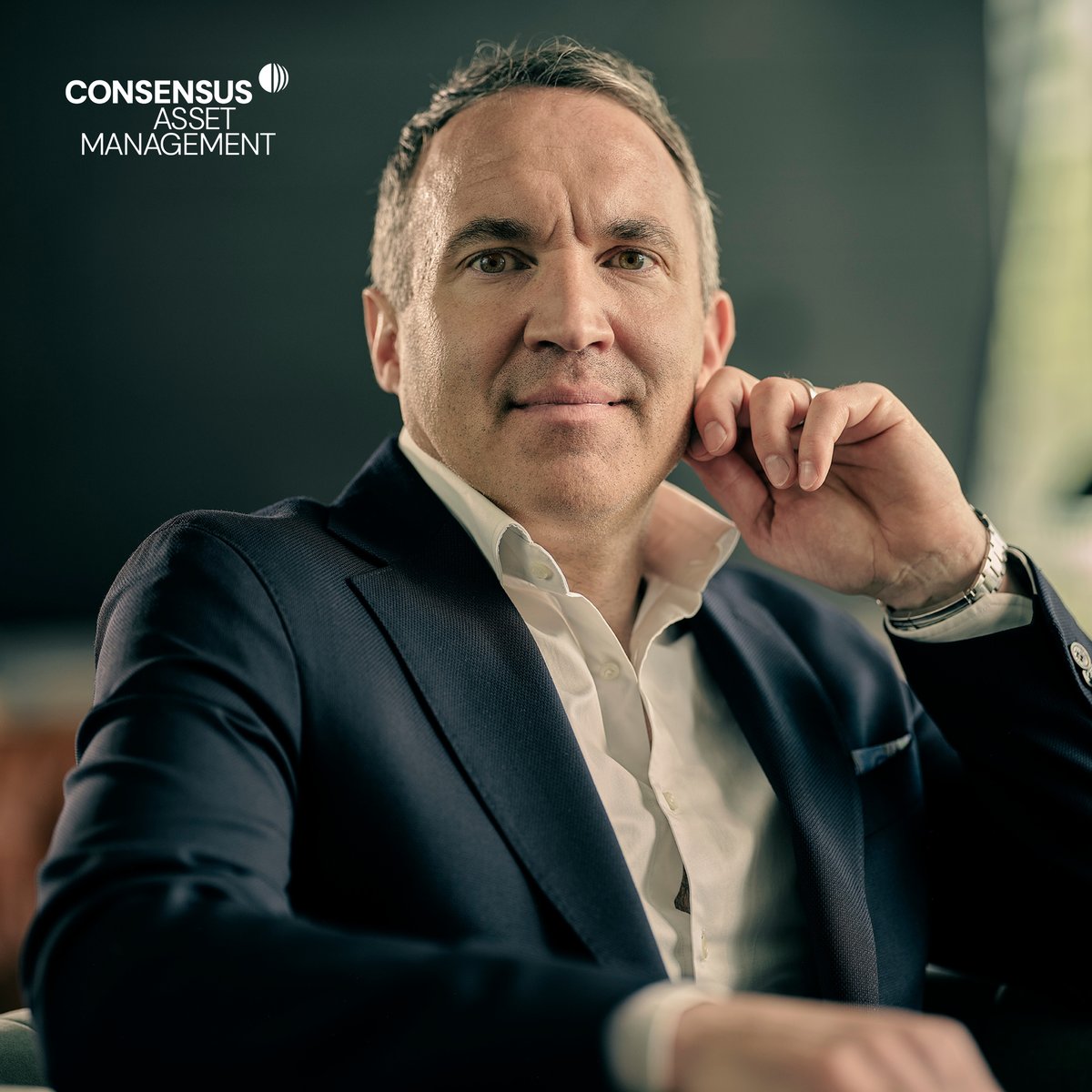
“Choosing the right IT structure is a strategic growth decision, not an IT decision,” says Andreas Moritz, CEO of Consensus.
Why is system choice a strategic decision for asset managers?
When Consensus chose Sharpfin as its platform, the objective was clear: increase assets under management, attract more portfolio managers, and enable new investment strategies—without raising operational or regulatory risk.
The real success factor was not the technical implementation alone, but a shared strategic view of how the business should evolve. Rather than treating the platform change as an IT project, the leadership positioned it as a core part of the company’s business strategy.
The impact was evident in day-to-day operations. Manual tasks were reduced and workflows became clearer. Most importantly, portfolio managers gained back time—time they could reinvest in prospecting, serving existing clients, and strengthening the relationships at the heart of Consensus’ business.
“For us, it was never about a system replacement. It was about building a structure that enables growth without increasing risk,” says Andreas Moritz.
How does regulatory control become a competitive advantage?
For asset management firms, control, traceability, and reporting are not only regulatory requirements – they are part of the value proposition. Clients and supervisory authorities demand a high level of transparency, and the ability to meet these expectations directly impacts the firm’s credibility and growth potential.
With Sharpfin, Consensus strengthened both risk management and operational control. The organisation gained clearer oversight of processes and decisions, reporting became more efficient, and the dialogue with supervisory authorities more structured. They could demonstrate, in practice, how control and regulatory compliance are managed.
That is not a minor improvement. It is a competitive advantage.
What does the right partner contribute to your growth journey?
What makes an asset management platform more than just a tool? The answer lies in what it enables over the long term.
Consensus wanted to grow AuM, attract more portfolio managers, and launch new investment strategies. Equally important was doing this in a controlled and sustainable way, without the organisation becoming more vulnerable as it grew – with a scalable structure where knowledge and workflows are no longer dependent on individual people.
For a firm whose identity is built on relationships and trust, choosing a technology partner is anything but trivial. It is about deciding who you want to grow with, and who truly understands what growth requires in practice, not only in theory.
“It is about having the right partner when you are about to embark on a growth journey,” says Andreas Moritz.
That is exactly what Sharpfin is built for.
What can other asset managers learn from Consensus?
The Consensus case highlights a broader truth across the industry: technical infrastructure is not a support tool – it is a strategic asset. Firms that treat system selection as a business decision rather than an IT decision create the foundation for growth that is both faster and more sustainable.
When portfolio managers have the right tools, they can focus on what they do best: creating value for their clients. And when the organisation is built to scale without becoming more vulnerable as it grows, growth becomes something you can plan for – not something you simply hope to withstand.
Follow the lead of leading asset managers
Experience the difference our platform can make for your business.
FAQs
-
Is Sharpfin Swedish?
Sharpfin is a Swedish company that develops software for Nordic wealth and asset managers.
-
Has Sharpfin local support?
With Sharpfin, your portfolio managers get fast, dedicated support in both Swedish and English.
-
How long does it take to go live with Sharpfin?
Sharpfin is easy to roll out across your organisation, with a typical implementation time of just 1–4 weeks. But, it of course also, depends on your current IT-setup and data.
-
Is Sharpfin Wealth Management Suite expensive?
Sharpfin’s pricing is based on assets under management (AuM), which often means a lower total cost than many alternatives as your business grows. For detailed pricing information, please contact us here.